Beginners Sourdough Bread Recipe: High Starter Method — Easy Sourdough Bread for Beginners
I still remember the smell of my first successful sourdough loaf — a tangy, toasty aroma that felt like a small victory. I fell in love with this Beginners Sourdough Bread Recipe: High Starter Method because it takes the mystery out of sourdough and gives reliably great results without long, complicated steps. This high-starter approach speeds fermentation, so you get that chewy crumb and crisp crust sooner than classic long-ferments. Sourdough itself has deep cultural roots: naturally leavened breads have nourished communities for millennia, from ancient Egyptian starters to modern artisan bakers keeping traditional techniques alive. This recipe is warm, forgiving, and a friendly way to join that tradition.
Who is this recipe for?
- This recipe is ideal for beginners, busy parents, and anyone who wants a straightforward sourdough loaf with dependable results.
Core ingredients overview:
- This bread combines an active sourdough starter, flour, water, and salt to make a simple, flavorful loaf: 2 cups Active Sourdough Starter (400 grams), 3 cups Sifted All-Purpose Flour (360 grams), 1 cup Warm Water (240 grams), 1.5 teaspoons Salt (≈9 grams).
Tools & Ingredients
Tools (you’ll need)
- Large mixing bowl (not metal) — gives plenty of room to mix and prevents reactive metal contact with starter
- Large spoon or dough whisk — for easy initial mixing of wet dough
- Kitchen scale — for accurate measuring (recommended)
- Bench scraper — helps with folding and shaping the dough
- Proofing basket (banneton) or a bowl lined with a floured towel — supports the loaf shape during final rise
- Dutch oven with lid — creates steam for a crisp crust and even baking
- Parchment paper — makes transferring dough to the hot Dutch oven safe and simple
- Clean kitchen towel or plastic wrap — to cover the dough while resting
- Wire cooling rack — for proper cooling to avoid a gummy crumb
Ingredients (with short benefits)
- 2 cups Active Sourdough Starter (400 grams) — provides natural leavening and complex flavor
- 3 cups Sifted All-Purpose Flour (360 grams) — versatile base that yields a tender crumb and good structure
- 1 cup Warm Water (240 grams) — hydrates the dough and activates the starter for fermentation
- 1.5 teaspoons Salt (≈9 grams) — enhances flavor and strengthens the dough’s gluten network
Instructions
- In a large mixing bowl (not metal), add 2 cups of active sourdough starter.
- Add 1 cup of warm water and whisk until combined.
- Add 3 cups of sifted flour and 1.5 teaspoons of salt. Mix with a large spoon to form a wet, shaggy dough.
- Cover the bowl with a damp towel and let the dough rest in a warm place for 2 hours.
- After resting, with wet hands, stretch and fold the dough over itself several times.
- Let the dough rise for about 45 minutes, then repeat the stretching and folding process.
- Shape the dough into a round loaf and place it in a floured proofing basket.
- Refrigerate for 4–8 hours.
- Preheat oven to 400°F (200°C) and place Dutch oven inside.
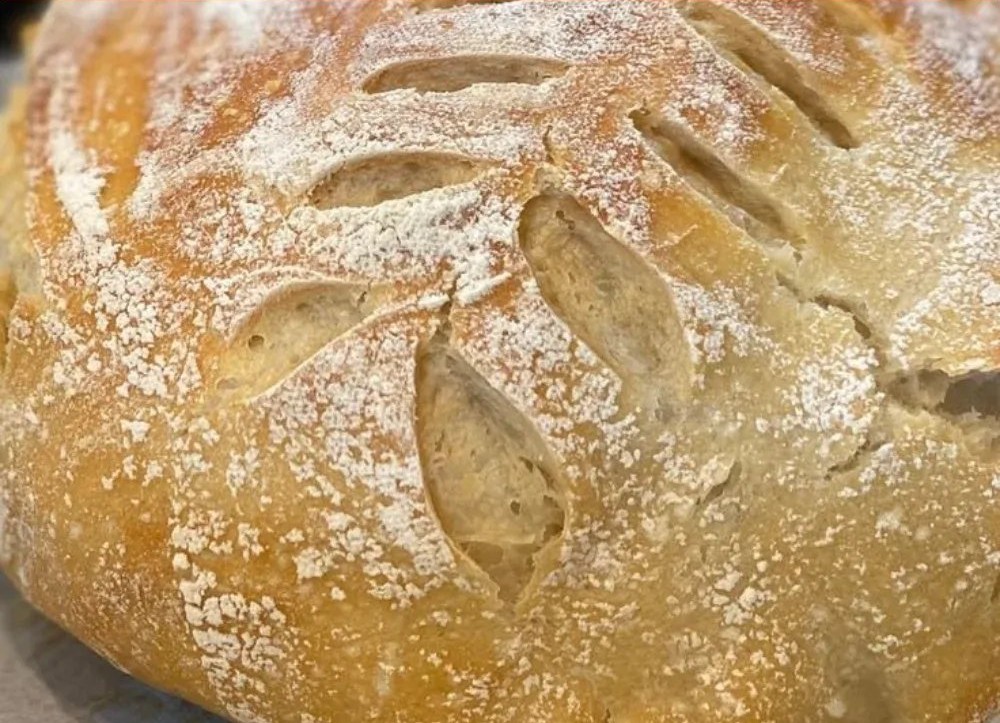
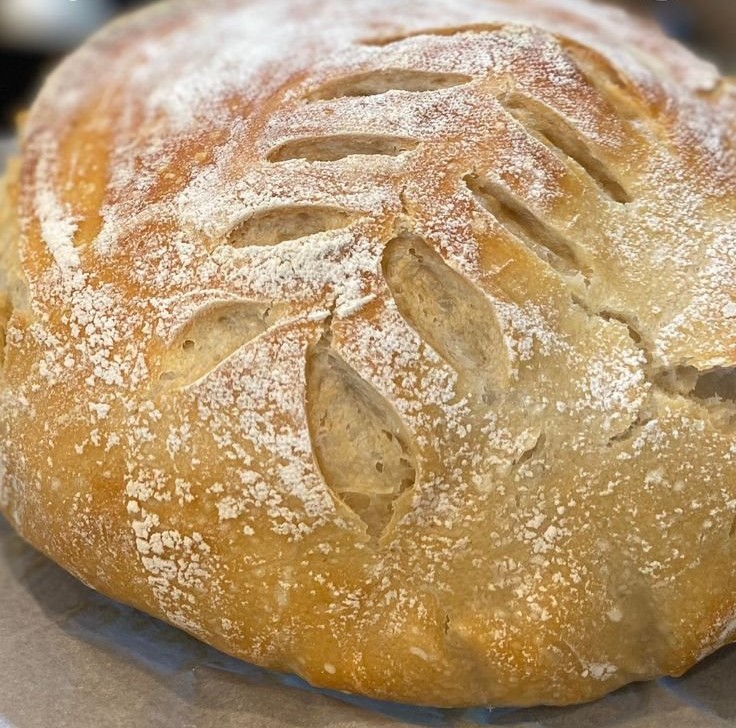
- Turn dough out onto parchment, score the top, and transfer to the hot Dutch oven.
- Bake covered for 25 minutes, then uncovered for an additional 25 minutes until golden.
- Cool completely on a wire rack before slicing.
FAQ
Q: Can I freeze this recipe?
- Yes. Once fully cooled, slice the loaf and freeze in airtight bags for up to 3 months. Toast slices straight from the freezer.
Q: What can I use instead of all-purpose flour?
- You can substitute a portion of the all-purpose flour with bread flour for more chew, or up to 20–30% whole wheat for flavor. Adjust hydration slightly if the dough feels stiff.
Q: My starter isn’t very active — can I still use this high-starter method?
- If your starter is sluggish, feed it and wait until it’s bubbly and doubled before using. This method benefits from an active starter for predictable rises.
Q: Do I have to use a Dutch oven?
- A Dutch oven gives the best crust because it traps steam. If you don’t have one, bake on a preheated baking stone and add steam to the oven (a pan of hot water or misting) during the first 10–15 minutes.
Tips & Tricks
- Use warm (not hot) water: about 75–80°F (24–27°C) encourages activity without stressing the starter.
- Keep your hands wet when handling the sticky dough to prevent tearing and sticking.
- Score confidently: make a quick, decisive slash to help the loaf open where you want it to bloom.
- Let the loaf cool fully (at least 1 hour) before cutting to set the crumb and avoid gummy texture.
Enjoy your homemade sourdough — slice, share, and savor the crackling crust.
Always add
tag after Directions.
Conclusion
If you want to build or refresh a reliable starter before baking, check this Beginner Sourdough Starter Recipe – The Clever Carrot. For another step-by-step beginner-friendly loaf guide, this How To Make Sourdough Bread | Beginner Sourdough Recipe offers useful visual tips. To learn more about sourdough basics and culture, read Sourdough Bread: A Beginner’s Guide – The Clever Carrot.

Beginner's Sourdough Bread
Ingredients
- 2 cups Active Sourdough Starter provides natural leavening and complex flavor
- 3 cups Sifted All-Purpose Flour versatile base that yields a tender crumb and good structure
- 1 cup Warm Water hydrates the dough and activates the starter for fermentation
- 1.5 teaspoons Salt enhances flavor and strengthens the dough’s gluten network
Method
- In a large mixing bowl (not metal), add 2 cups of active sourdough starter.
- Add 1 cup of warm water and whisk until combined.
- Add 3 cups of sifted flour and 1.5 teaspoons of salt. Mix with a large spoon to form a wet, shaggy dough.
- Cover the bowl with a damp towel and let the dough rest in a warm place for 2 hours.
- After resting, with wet hands, stretch and fold the dough over itself several times.
- Let the dough rise for about 45 minutes, then repeat the stretching and folding process.
- Shape the dough into a round loaf and place it in a floured proofing basket.
- Refrigerate for 4–8 hours.
- Preheat oven to 400°F (200°C) and place Dutch oven inside.
- Turn dough out onto parchment, score the top, and transfer to the hot Dutch oven.
- Bake covered for 25 minutes, then uncovered for an additional 25 minutes until golden.
- Cool completely on a wire rack before slicing.